

Blood tests for early cancer detection (MCED): evidence, limitations and clinical reality
Biological basis, clinical evidence, regulatory positions and outlook for multi-cancer early detection (MCED) tests.
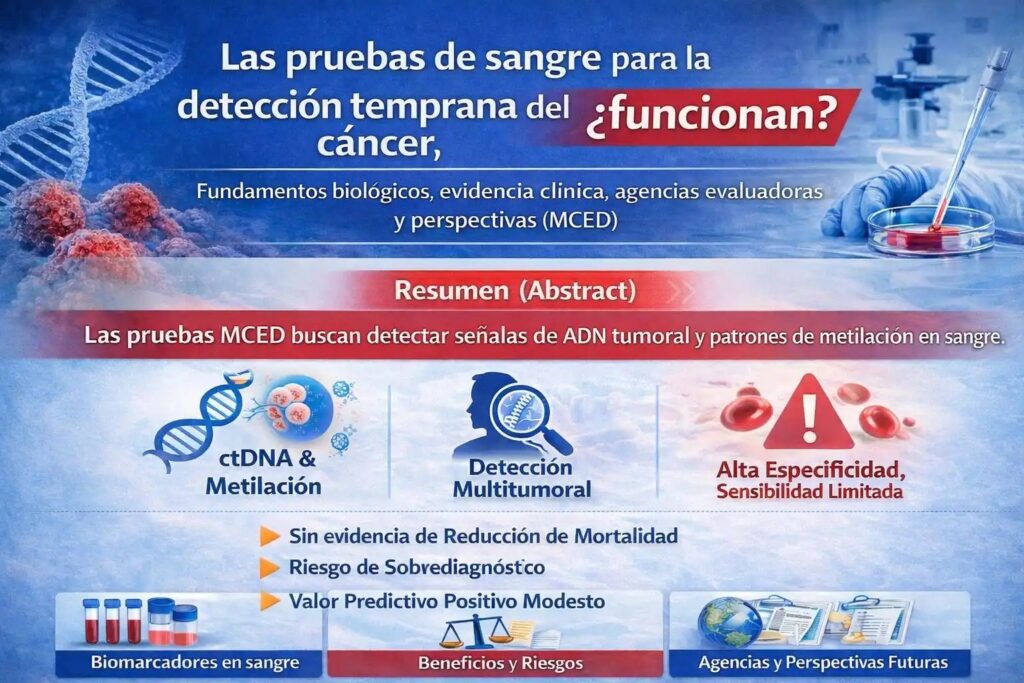
Blood tests that promise to detect several types of cancer before symptoms appear are gaining visibility. Dr Adrián Pablo Huñis reviews what they detect, what the evidence has shown, their risks and what use is reasonable today.

What MCED tests are
Multi-cancer early detection (MCED) tests analyse a blood sample for tumour signals, mainly fragments of circulating tumour DNA and methylation patterns. They are aimed at people without symptoms, and some also attempt to indicate the organ of origin.
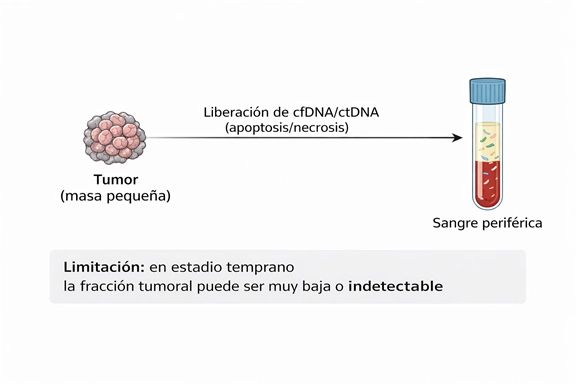
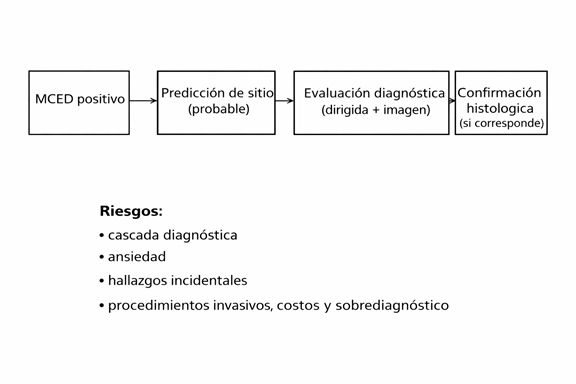
Dr Adrián Pablo Huñis stresses a key point: a positive result is not a diagnosis, but the start of a work-up involving imaging and biopsy. And a negative result does not rule out cancer or replace recommended screening.
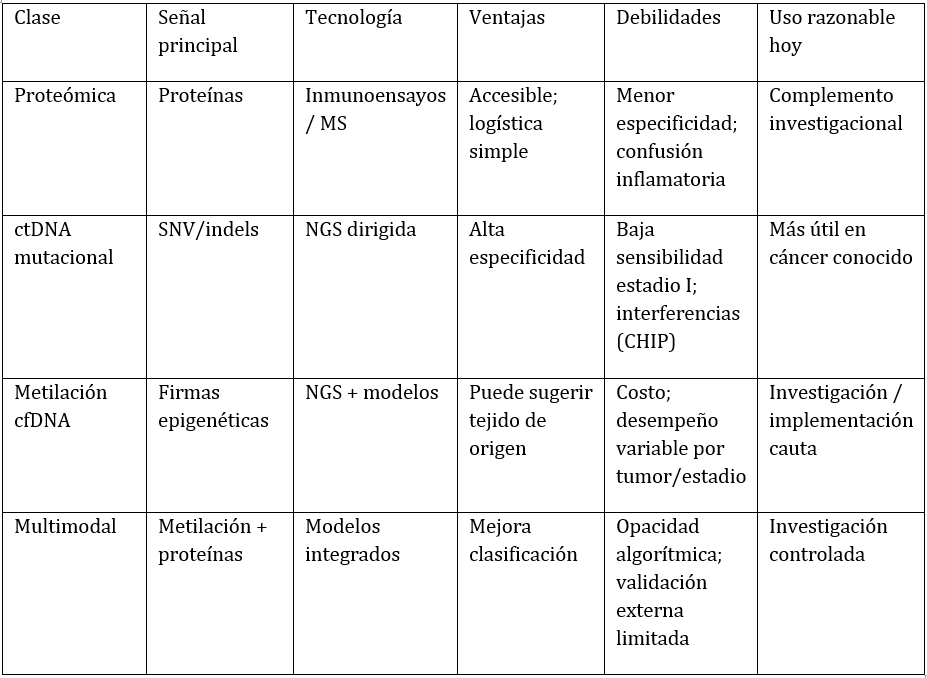
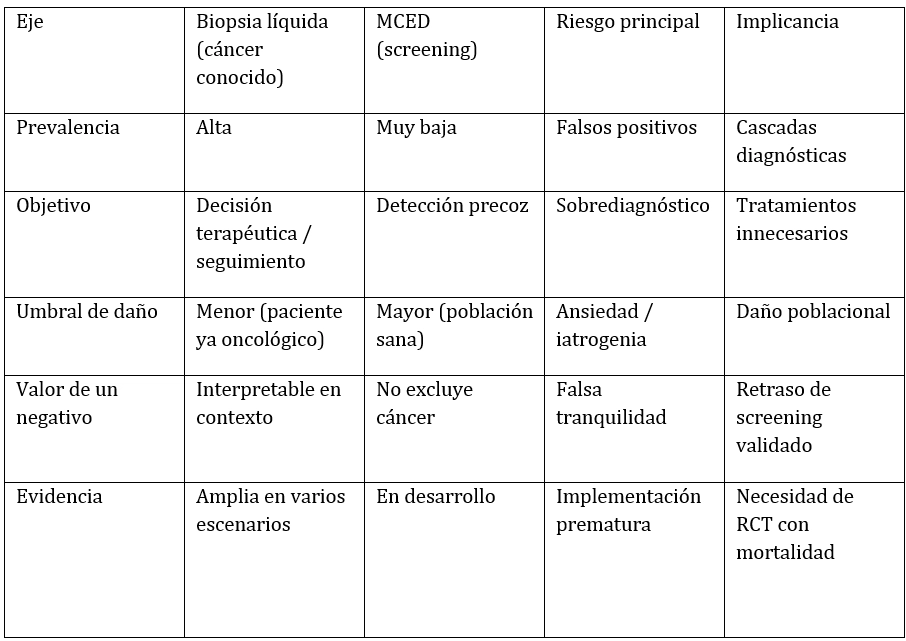
They should not be confused with liquid biopsy, which is used in patients with an established cancer diagnosis to guide treatment or follow-up. Moving into screening of healthy people completely changes the balance between benefits and risks.
What the evidence shows
Published validations of methylation-based tests show very high specificity, above 99%, but moderate sensitivity: in the study by Liu and colleagues it was around 55% overall, and lower in early stages, precisely where detection would matter most.
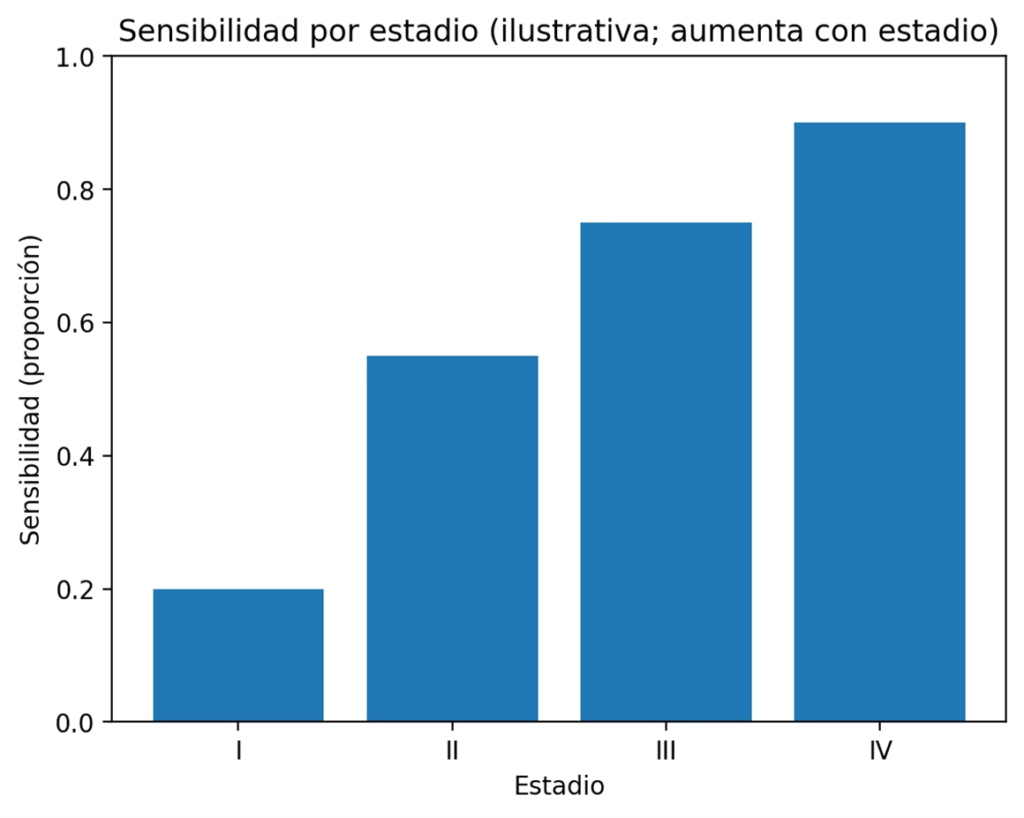
Prospective studies such as PATHFINDER show that the test can guide the diagnostic work-up, but they have not demonstrated a reduction in cancer mortality.
The predictive value problem
In the general population cancer is uncommon. As a result, even with very high specificity, a significant proportion of positive results will be false positives.
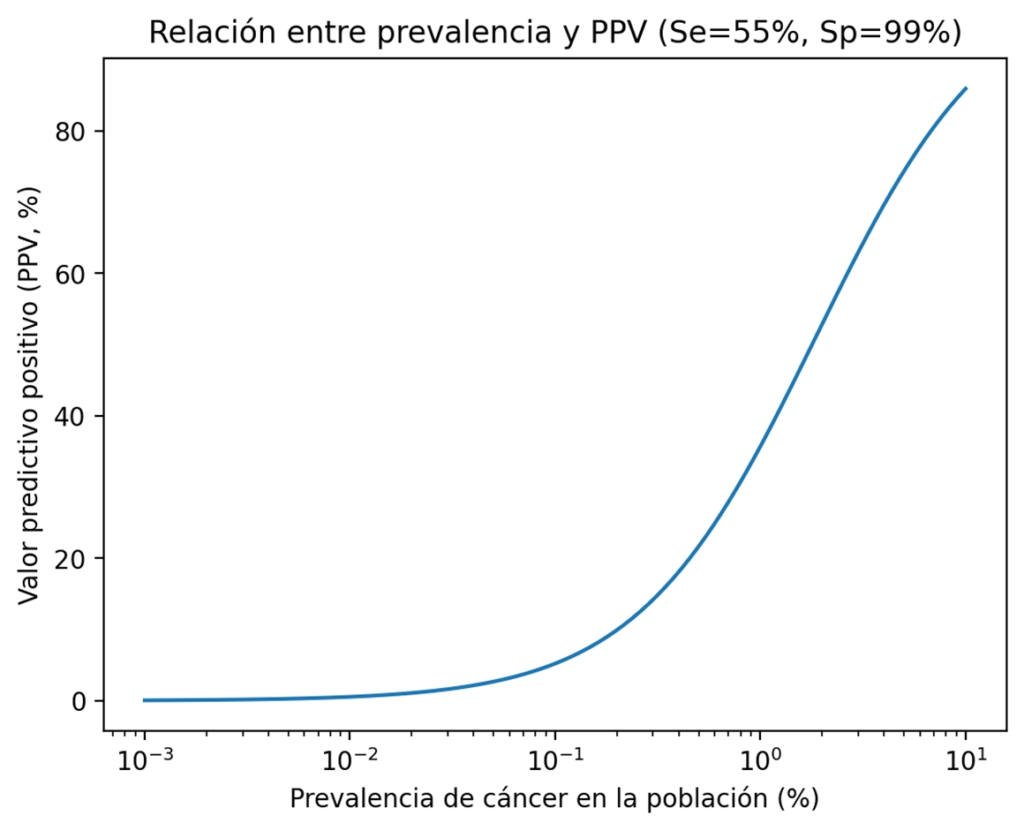
This can lead to:
- Cascades of unnecessary diagnostic tests.
- Anxiety and incidental findings.
- Overdiagnosis of lesions that would never have caused problems.
What the agencies say
In the United States these tests are offered as laboratory-developed tests, but they are not FDA-approved for population screening, and the USPSTF does not recommend them for general screening. Societies such as ASCO and the American Cancer Society agree that studies with hard outcomes, such as mortality, are needed before widespread use.
A reasonable way forward
The author considers it sensible to explore their use in high-risk populations, as a complement to and never a substitute for validated screening, and always with clear protocols following a positive result.
Today, the most prudent use of MCED tests is in research or in tightly controlled programmes.
Bibliografía
- Liu MC, et al. Sensitive and specific multi-cancer detection and localization using methylation signatures in cell-free DNA. Ann Oncol. 2020;31(6):745-59.
- Klein EA, et al. Clinical validation of a targeted methylation-based multi-cancer early detection test using an independent validation set. Ann Oncol. 2021;32(9):1167-77.
- Schrag D, et al. Blood-based tests for multicancer early detection (PATHFINDER): a prospective cohort study. Lancet. 2023;402(10409):1251-60.
- Guerra CE, et al. Multicancer early detection tests at a crossroads. ASCO Educational Book. 2025. https://doi.org/10.1200/EDBK_473834
- American Cancer Society. Multi-cancer Early Detection (MCED) Tests. https://www.cancer.org/cancer/screening/multi-cancer-early-detection-tests.html
- U.S. Preventive Services Task Force. A and B Recommendations. https://www.uspreventiveservicestaskforce.org/uspstf/
¿Te ha resultado útil esta noticia?
Comentarios
Sé el primero en comentar.



Deja tu comentario